
Why Premium Fishing Shirts Cost More
Table of Contents
- What Makes Premium Fishing Shirts Different
- Premium Fishing Shirt Features That Drive Cost
- Fishing Shirt Materials and Their Impact on Price
- Understanding UPF Fishing Shirts and Sun Protection
- Premium vs. Budget Fishing Shirts: Where the Money Goes
- Durability and Long-Term Value
- Cost-Per-Wear: The Real Investment
- Frequently Asked Questions
Last Updated: October 17, 2026
What Makes Premium Fishing Shirts Different
Spend hours on the water and the difference between a cheap fishing shirt and a premium one becomes obvious fast. Premium fishing shirts are built differently, with materials and construction designed to handle sun, salt water, and repeated wear in ways budget options can't match.

Those who invest in premium fishing shirts report fewer complaints about discoloration, fading, and deterioration. That's not luck. It's engineering. The real question isn't whether premium fishing shirts cost more, but whether that extra money delivers value over time.
Premium Fishing Shirt Features That Drive Cost
Premium fishing shirts pack performance features that budget alternatives skip. Each one adds cost, but each one also solves a real problem anglers face on the water.

Advanced Moisture-Wicking Technology
Moisture-wicking is a specific fabric property that moves sweat away from your skin so it evaporates faster. Budget shirts often use basic polyester that absorbs moisture; premium shirts use engineered synthetic fibers with tighter knit construction that pulls sweat outward. Trapped moisture causes chafing, discomfort, and odor, and the tighter knit density and fiber treatment that prevent it cost more to manufacture.
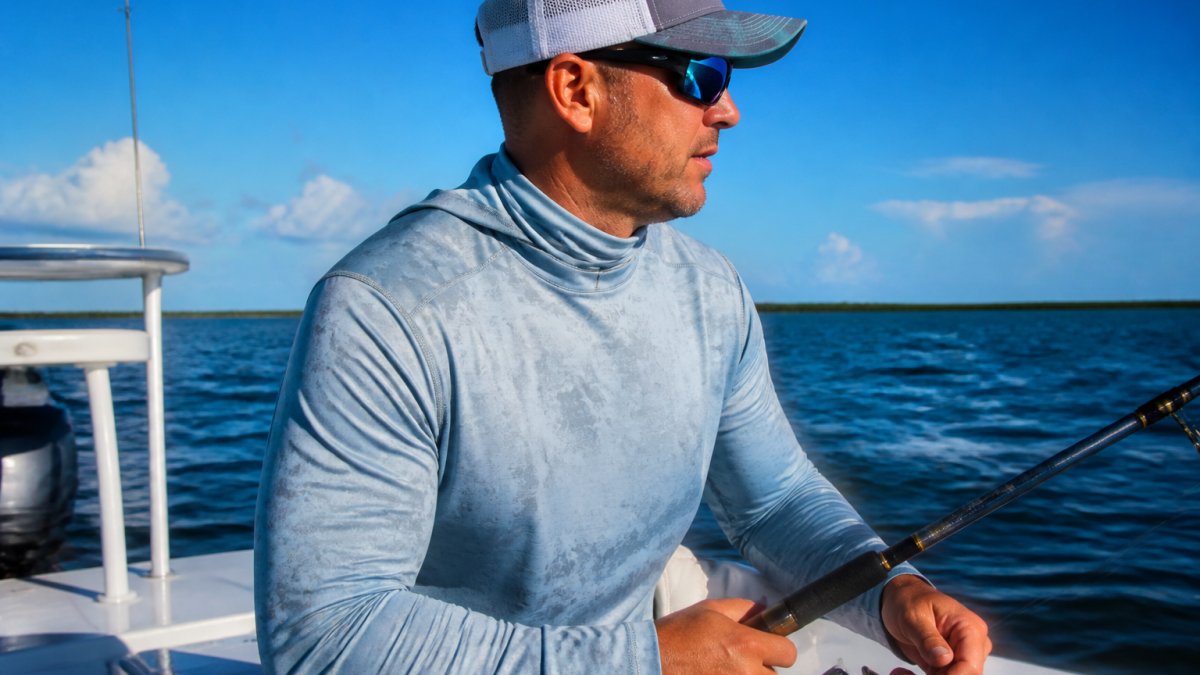
Superior UV Protection Standards
UPF ratings measure how much ultraviolet radiation a fabric blocks. UPF 44 means only 1/44th of UV rays pass through. Budget shirts often carry UPF 15 or no rating at all. Reaching UPF 44+ requires denser weaves, special polymer coatings, or UV-absorbing compounds built into the fiber, all of which add manufacturing cost. The protection is real and measurable, but expensive to build.
Enhanced Durability Construction
Premium fishing shirts use reinforced stitching at stress points like shoulder seams and armholes, while budget shirts use single-needle stitching that fails faster. Double-needle cover stitch hems and reinforced shoulder seams last through hundreds of washes. The tag-free neck design eliminates all-day tag irritation and requires different collar construction, which costs more, but after eight hours on the water you'll feel the difference.
Fishing Shirt Materials and Their Impact on Price
Fabric determines almost everything about performance and longevity, but "polyester" alone tells you little. Two shirts can both say 100% polyester and behave completely differently because fiber grade, knit structure, weight, and finishing drive performance and cost.
Fiber type and blend
Most premium fishing shirts use a synthetic base, typically polyester, sometimes blended with 5% to 12% spandex for stretch or with nylon for a softer hand. Budget shirts often use commodity polyester, sometimes blended with cotton, which holds water, dries slowly, and stays damp against the skin.

Knit structure
Premium fishing shirts commonly use a fine-gauge interlock or double-knit structure that produces a smooth face, denser hand, and better recovery than a basic single jersey. A denser knit blocks more UV, resists snagging on tackle and boat hardware, and drapes more cleanly.
Fabric weight
Premium fishing shirts typically land around 4 oz/yd², light enough for active fishing and heavy enough to resist snagging and hold shape. Budget shirts often run lighter (3 to 3.5 oz/yd²) to save material cost, which makes them feel flimsy and wear out faster.
Finishes and treatments
Much of the hidden cost sits here. Premium fabrics often carry a moisture-wicking finish, a stain-release finish that helps fish blood and salt water wash out, and an odor-control treatment, plus UV-absorbing compounds built into the fiber or applied as a finish.
Dyeing and colorfastness
How well dye stays locked in the fabric is another cost driver. Premium shirts use dyeing processes, sometimes solution dyeing where pigment is added to the fiber before it is spun, that resist fading from sun and salt water.
What you can inspect in person or in product photos
- Fabric weight and composition on the label: look for a stated oz/yd² and a synthetic-dominant blend without cotton in the body.
- Knit density: pinch and release; premium fabric recovers.
- Seam construction: flatlock or coverstitch seams lie flat and reduce chafing; single-needle seams are a budget signal.
- Stitch density: more stitches per inch generally mean a stronger seam, though very tight stitching on thin fabric can pucker.
- Finishing details: tagless neck labels, bonded or taped seams at stress points, and clean hem finishing all add labor and cost.
These details separate a shirt built for repeated saltwater exposure from one built to hit a low price point, and each carries a real cost at the manufacturing stage.
Understanding UPF Fishing Shirts and Sun Protection
UPF stands for Ultraviolet Protection Factor. It measures how effectively a fabric blocks ultraviolet radiation. A UPF 44+ shirt blocks approximately 97% of UV rays; UPF 15 blocks about 93%. That sounds close, but over an eight-hour day on the water, cumulative UV exposure adds up. One day with poor protection might not matter. A hundred days across a season absolutely does.
Premium fishing shirts achieve UPF 44+ through several methods:
- Tighter weave density, More fibers per square inch block more rays
- Fiber type, Some synthetic polymers naturally absorb more UV than others
- Chemical treatment, UV-absorbing compounds can be applied to fibers during manufacturing
- Layering, Some premium shirts use multiple fabric layers for enhanced protection
Budget shirts rarely invest in these methods, achieving basic UV protection through simple polyester that doesn't reach premium levels. For a commercial fisherman working 200+ days per year, the cumulative protection difference between UPF 15 and UPF 44+ is substantial.
Premium vs. Budget Fishing Shirts: Where the Money Goes
A budget fishing shirt might cost $12 to $18. A premium fishing shirt costs $30 to $35. That's roughly double. Here's where the extra money actually goes.
Material Quality and Treatment
Premium shirts use higher-grade polyester with better dye consistency and UV-resistant finishing; budget suppliers use commodity polyester with minimal treatment. That's a $3 to $5 per shirt difference at manufacturing scale.
Construction Standards
Reinforced seams, tag-free necks, and double-needle hems require more labor and precision. A budget shirt gets basic single-needle stitching; a premium shirt gets multiple passes of reinforced stitching at stress points. That's $2 to $4 in additional labor per shirt.
SaltyGrown Men's Short Sleeve Performance Shirt →
Quality Control and Testing
Premium manufacturers test fabric samples for UPF rating, colorfastness, and durability. They maintain tighter tolerances on weight, stretch, and shrinkage. Budget manufacturers skip most of this. Testing and quality control add $1 to $3 per shirt.
Design and Development
Premium brands invest in R&D to optimize fit, performance, and aesthetics, testing prototypes with actual users. Budget manufacturers often copy existing designs with minimal testing. That development cost gets spread across fewer units, adding to per-shirt cost.
Supply Chain and Scale
Smaller premium brands lack the manufacturing scale of massive retailers, can't negotiate the lowest material costs, and invest in domestic fulfillment and customer service. A larger budget brand can undercut price through pure volume. That's a structural cost difference of $3 to $8 per shirt.
When you add it up, material, construction, testing, design, and supply chain, the $15 to $17 price difference makes sense. It's not markup. It's real cost.
Durability and Long-Term Value
A budget shirt might last one season of regular use before seams fail, color fades, and the fabric thins. A premium fishing shirt should last 2 to 3 seasons with proper care: reinforced seams hold up through hundreds of washes, UV-resistant dye stays vibrant, and the fabric keeps its structure without holes or thin spots.
Real durability comes from:
- Better fiber quality, Premium polyester resists breakdown from UV and salt exposure
- Reinforced seams, Double-needle stitching at stress points prevents tearing
- Proper finishing, Dye and treatment processes that lock color and protect fibers
- Tighter construction, Dense knit resists snagging and maintains shape
A commercial fisherman working 200+ days per year will replace a budget shirt multiple times. A premium shirt might last the entire season and into the next. Over time, the cost per wear drops significantly.
Cost-Per-Wear: The Real Investment
This is the calculation most anglers miss. Don't compare the price tag; compare cost per actual use, then factor in care, warranty, and how long performance lasts. A transparent cost-per-wear model, including ownership costs, is the part of the decision almost no one lays out.
The basic math
Cost per wear equals purchase price divided by the number of wears before the shirt no longer performs acceptably. "Acceptably" is the key word: a shirt that still covers you but has lost its UPF protection, wicks poorly, or has failing seams is no longer doing the job.
A simple illustration:
- Budget shirt: $15, roughly 50 wears before noticeable deterioration, about $0.30 per wear.
- Premium shirt: $32, roughly 150 wears before comparable deterioration, about $0.21 per wear.
The premium shirt costs less per wear even though it costs more upfront. But that model only holds if the premium shirt actually retains its performance, and that depends on care and construction.
Performance retention, not just survival
A shirt can physically survive and still underperform. What matters is whether UPF protection holds after repeated washing and stretching, whether moisture-wicking still works after 50 washes, and whether color and fit hold.
Care requirements affect ownership cost
Care instructions are part of the price. Fabric softener and dryer sheets coat performance fibers and reduce wicking, and high heat degrades spandex and some finishes, so premium shirts often specify avoiding them.
Warranty and repair coverage
Warranty policy is a real ownership-cost variable most shoppers ignore. A generous warranty or repair program can offset the higher upfront price if a seam fails or a zipper breaks.
A practical budget-versus-premium framework
Use these questions to decide whether the premium price is justified for you:
- How often do you fish? If you are on the water 100 or more days a year, durability and performance retention dominate, and premium usually wins on cost per wear. If you fish a handful of weekends, a mid-tier shirt may be the better value.
- What is your exposure? Long days in intense sun and salt water reward higher UPF, better wicking, and colorfast fabric. Short, shaded trips need less.
- What is your climate? Hot, humid conditions put a premium on breathability, quick drying, and odor control. Cooler or mixed conditions may let you prioritize fit and coverage over maximum cooling.
- How hard is the wear? Boat hardware, tackle, and repeated washing stress seams. Reinforced construction pays off for active anglers.
- What is your tolerance for replacement? If you dislike rebuying gear mid-season, pay for construction and warranty. If you treat shirts as consumables, budget options can make sense.
For a commercial fisherman working 200 days per year, a budget shirt might need replacing twice per season while a premium shirt lasts the season and into the next. Over five years, that's many budget shirts versus a couple of premium ones, with better performance throughout.
The real value of premium fishing shirts is not the initial purchase. It is the durability, performance retention, care convenience, and warranty support across months of use.
Frequently Asked Questions
Are premium fishing shirts worth the extra cost?
Yes, if you spend significant time on the water. Premium fishing shirts offer UPF 44+ protection, moisture-wicking that lasts through repeated washing, reinforced seams, and fade-resistant fabrics. A $35 shirt worn 50+ days per year costs roughly $0.70 per wear over two years, while budget alternatives may need replacement annually. The durability, sun protection, and comfort justify the investment for regular anglers and professionals.
What makes UPF fishing shirts different from regular performance shirts?
UPF fishing shirts are engineered specifically for water environments. They combine moisture-wicking with sun protection rated UPF 44+, snag resistance for catching on tackle and rigging, and odor control for salt-soaked conditions. Regular performance shirts lack the salt-water durability, colorfastness, and stain resistance built into fishing-specific designs. The ultra-tight knit construction also prevents show-through when wet, which matters on the water.
How long should a quality premium fishing shirt last?
A well-made premium fishing shirt should last 2-3 years of regular use with proper care. Quality performance shirts feature reinforced shoulder seams, double-needle cover stitch hems, and fade-resistant polyester that withstand repeated exposure to salt, sun, and sweat. Budget alternatives often show fading, seam separation, or odor retention within 12 months. Proper rinsing after saltwater exposure and air drying extends lifespan significantly.
What fishing shirt materials offer the best value?
Lightweight 100% polyester (4 oz/yd²) offers the best balance of performance and cost. It wicks moisture efficiently, dries quickly, resists salt staining, and supports high UPF ratings without adding bulk. Polyester blends with nylon add stretch and durability but increase price. Avoid cotton or cotton blends for fishing; they absorb water, take hours to dry, and offer no UV protection. Premium polyester construction with tight knit and reinforced seams justifies higher pricing.