
How to Care for Performance Coastal Apparel
Table of Contents
- Why Performance Coastal Apparel Needs Special Care
- How to Wash UPF Fishing Shirts Without Damaging the Fabric
- How to Remove Sunscreen Stains from Performance Clothing
- How to Get Fish Odor Out of Fishing Shirts
- Drying and Storage to Prevent Fading and Fiber Damage
- Restoring Moisture-Wicking Performance Over Time
- Frequently Asked Questions
Last Updated: October 12, 2026
Why Performance Coastal Apparel Needs Special Care
Performance coastal apparel isn't like regular cotton shirts. These garments are engineered to handle sun, salt, sweat, and constant exposure to harsh marine environments.

But here's what most people miss: the very features that make performance coastal apparel so durable can be damaged by standard washing routines. Fabric softeners break down moisture-wicking properties. Hot water accelerates color fading. Aggressive drying methods weaken reinforced stitching.
The good news is straightforward: caring for performance coastal apparel doesn't require special equipment or complicated steps. It requires understanding what these fabrics are and treating them accordingly. Once you know the basics, maintaining your investment becomes routine.
How to Wash UPF Fishing Shirts Without Damaging the Fabric
The foundation of proper care for performance coastal apparel starts with how you wash it. Most damage happens in the washing machine, not from wearing the garment.

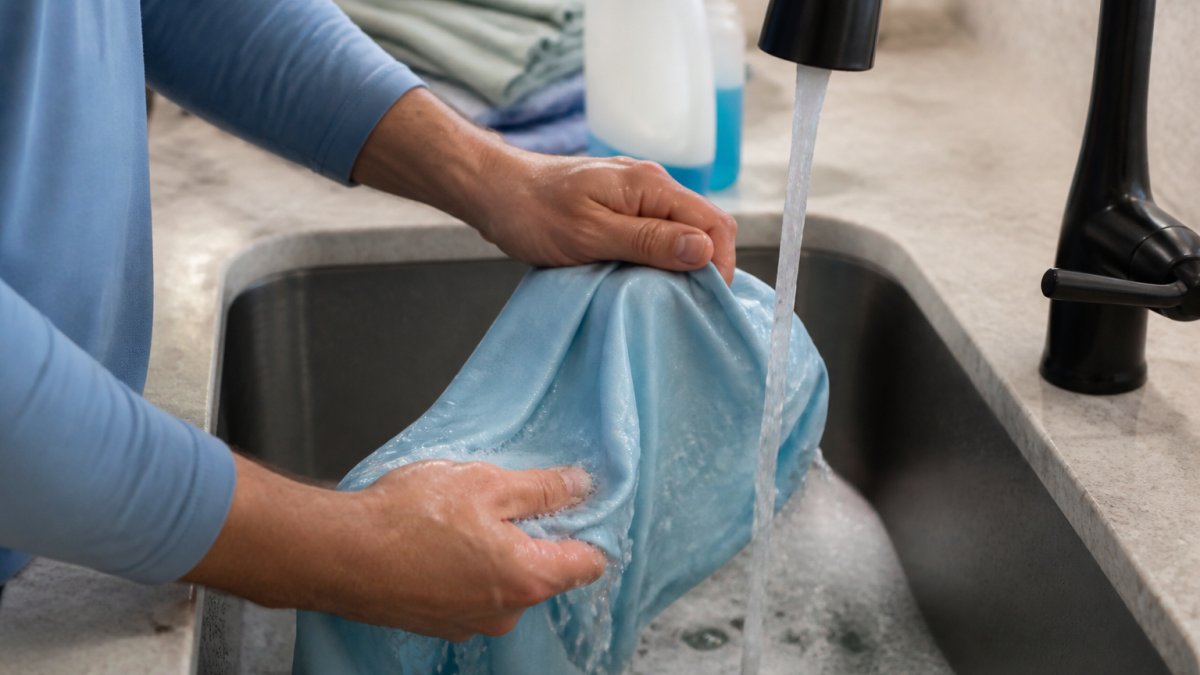
Choose the Right Water Temperature and Cycle
Cold water is non-negotiable for care for performance coastal apparel. Cold water, between 60 and 80 degrees Fahrenheit, preserves the dye molecules in the fabric and prevents the breakdown of elastic fibers in the knit.
Use the gentle or delicate cycle on your machine. This setting minimizes agitation, which is the primary cause of fiber damage, pilling, and snag formation. Standard or heavy cycles are too aggressive for performance fabrics.
Wash your performance apparel separately from other clothes. Zippers, buttons, and rough textures from other garments can snag the tight knit of performance fabric. This also prevents lint transfer and color bleeding if you're washing darker colors.
Select the Best Detergent for Moisture-Wicking Clothes
Not all detergents are created equal when it comes to performance fabric. Standard laundry detergents often contain additives that coat fibers and reduce breathability. Fabric softeners, whether liquid or sheet form, are the enemy of moisture-wicking performance clothing.
Choose a mild, pH-neutral detergent. Sport-specific or technical fabric detergents are designed to clean without coating fibers. Use half the amount you'd normally use for a regular load.
Avoid bleach and oxygen-based cleaners on colored performance apparel. These break down dyes and can cause uneven discoloration. For white performance fishing shirts, a small amount of oxygen-based cleaner is acceptable, but skip it if you want to preserve the garment's appearance long-term.
How to Remove Sunscreen Stains from Performance Clothing
Sunscreen is essential protection on the water, but it creates stubborn stains on performance fabric.
Treat sunscreen stains immediately if possible. Let the stain dry completely, don't rinse it fresh. Once dry, the sunscreen is easier to remove.
For fresh sunscreen stains, apply a small amount of dish soap directly to the stain. Dish soap cuts through oily residue more effectively than laundry detergent.
For set-in stains, mix equal parts white vinegar and cool water. Soak the stained area for 30 minutes, then gently scrub with a soft brush. Rinse thoroughly with cool water.
Never wash a sunscreen-stained performance shirt in hot water before the stain is fully removed. Heat sets oily stains permanently into synthetic fibers.
How to Get Fish Odor Out of Fishing Shirts
Fish smell is the most common complaint from people who wear performance fishing shirts regularly.
Soak the shirt in cool water mixed with white vinegar, about one part vinegar to three parts water, for 30 to 45 minutes.
For stubborn odor, try baking soda. Sprinkle dry baking soda directly on damp fabric and let it sit for 2 to 4 hours. Baking soda absorbs odor molecules.
After washing, don't dry the shirt in direct sunlight if it still smells. Sunlight can set odors into fabric. Instead, air-dry in a shaded, well-ventilated area.
For prevention: rinse your performance fishing shirt with fresh water immediately after a day on the water.
SaltyGrown Men's Short Sleeve Performance Shirt →
Drying and Storage to Prevent Fading and Fiber Damage
How you dry performance coastal apparel matters as much as how you wash it. The two failure modes that ruin these garments fastest are heat and ultraviolet light, and both are easy to avoid once you understand the mechanism.

Why the Dryer Is the Wrong Tool
Moisture-wicking knits rely on two things: the shape of the fiber (often a modified polyester or nylon cross-section that channels liquid) and the finish applied to it. High heat does two things at once. It can soften and distort the elastic fibers in an elastane blend, which is what gives a fishing shirt its stretch and recovery.
If you absolutely must use a machine, use the lowest heat setting (often labeled "air fluff" or "tumble low") for no more than 10 to 15 minutes to knock out surface moisture, then finish on a line. Never use a dryer sheet in that cycle, the coating transfers to the fabric and defeats wicking the same way liquid softener does.
Air-Drying Without Sun Damage
Air-drying is the default. The coastal-specific catch is that "air-dry" and "dry in the sun" are not the same thing. Intense UV breaks down the dye molecules in synthetic fabrics and, over time, degrades the UV-blocking finish itself. A shirt that starts at UPF 50 can lose protection after repeated full-sun drying cycles, even though the fabric still looks intact.
Hang garments in a shaded, well-ventilated spot, under a covered patio, on a porch, or on an indoor drying rack near an open window. If shade isn't available, dry inside-out so the outward-facing surface takes less direct UV.
Storage That Protects the Finish
Once dry, fold performance apparel neatly and store it in a cool, dry place out of direct sunlight. Moisture is the enemy here, damp fabric in a closed space grows mildew and bacteria, which is what produces that sour smell that survives a wash.
- Skip plastic bins and bags. They trap humidity. Cotton storage bags, breathable garment bags, or open shelving all work better.
- Avoid stacking heavy items on top. Compression creates permanent creases in synthetic knits and can flatten the loft that helps a fabric breathe.
- Hang if you have the space. A wide plastic or padded hanger keeps the shoulder shape and prevents fold lines from setting in over months of storage.
- In humid climates, a small desiccant pack in the storage area helps, and rotating garments so nothing sits compressed for a full season extends their useful life.
The Trade-Off to Know
Air-drying takes longer than a dryer cycle, and in a humid coastal climate a shirt can take most of a day to dry. That's the cost. The benefit is that you preserve wicking performance, color, and the UV finish for years instead of months, which is the whole reason you bought a performance garment in the first place.
Restoring Moisture-Wicking Performance Over Time
After months of regular use, even well-cared-for performance coastal apparel can lose some of its moisture-wicking effectiveness. This is the section most care guides skip, and it's where the real money is saved, because the fix is usually a deep clean, not a new shirt.
What Actually Causes the Decline
Moisture-wicking works because liquid moves along the fiber surface and through the knit's channels toward the outside of the garment, where it evaporates. Three things interrupt that path:
- Detergent and softener residue. Even a mild detergent leaves a thin film if you use too much or wash in hard water. That film is hydrophobic in the wrong way, it blocks the fiber surface instead of helping liquid move.
- Body oils and sunscreen. These bond to synthetic fibers and are not fully removed by a normal cool-water wash cycle.
- Mineral and salt buildup. Hard-water calcium and leftover salt from the ocean deposit in the fabric and stiffen it, reducing breathability.
The result is a shirt that feels clammy, dries slowly, and holds odor. Odor-control finishes work by inhibiting bacteria, and once residue and bacteria accumulate in the fabric, the finish can't keep up.
The Deep-Clean Reset
A vinegar soak is the standard first move because the acid dissolves mineral deposits and helps lift detergent film. Use roughly one-quarter cup of white vinegar per gallon of cool water, soak for 45 minutes to an hour, then rinse thoroughly. Follow with a gentle-cycle wash using half the normal amount of a mild, pH-neutral detergent, no softener, no dryer sheets.
If one cycle doesn't restore the hand-feel, repeat it. One or two soaks can bring back the majority of the original wicking behavior, though the exact amount varies by fabric, water hardness, and how long the buildup has been accumulating.
Fabric-by-Fabric Notes
Not every performance fabric responds the same way, so adjust the reset to what you're washing:
- Polyester is the most forgiving. It tolerates the vinegar soak well and dries fast. Watch for pilling if you scrub too hard.
- Nylon is strong but more prone to yellowing from UV and heat. Keep it out of the dryer and out of direct sun.
- Elastane blends (the stretchy ones) are the most heat-sensitive. Cool water and air-drying matter most here, because heat is what kills the stretch.
- UPF-treated fabrics can lose their sun-blocking finish over time regardless of care. There's no home treatment that restores UPF, once it's gone, it's gone.
- Prints and trims (screen prints, reflective tape, zippers) should be washed inside-out and air-dried to prevent cracking and delamination.
Testing Whether It Worked
After the reset, wear the garment on a warm day or during light activity. You should notice sweat moving off your skin faster and the fabric feeling drier against you. If the shirt still feels clammy and holds odor after two deep-clean cycles, the buildup has likely gone too far, or the finish has worn out. At that point, the garment has reached the end of its practical life, typically a few years of heavy use with proper care.
The Low-Impact Trade-Off
The same habits that restore performance also reduce your footprint: washing less often (spot-clean and air out between wears), using cooler cycles, and air-drying instead of running the dryer. Each of those choices extends the garment's life, which is the single biggest environmental win in apparel care, a shirt you keep for five years instead of one has a fraction of the impact per wear. The trade-off is time and a little more attention. For most people who've invested in quality performance coastal apparel, it's worth it.
Frequently Asked Questions
How do you remove salt from a performance shirt?
Rinse your performance shirt immediately after coastal use with fresh, cool water to dissolve salt deposits before they set into the fibers. For dried salt stains, soak the shirt in cool water for 15-20 minutes, then gently rub the affected area with your fingers or a soft brush. Wash using cold water and a mild detergent designed for performance fabrics. Salt buildup weakens fibers and dulls moisture-wicking, so prompt rinsing is critical for extending garment lifespan.
Can you use fabric softener on moisture-wicking clothes?
No, avoid fabric softeners entirely on moisture-wicking apparel. Softeners coat fibers with waxy substances that block the fabric's ability to wick sweat away from your skin. This defeats the core performance feature and traps odor. Stick to mild detergents without additives, and your moisture-wicking performance will stay intact wash after wash.
What's the best detergent for moisture-wicking clothes?
Choose a mild, dye-free detergent without fabric softeners, optical brighteners, or heavy perfumes. Sports-specific or performance-fabric detergents work best because they're formulated to clean without coating fibers. Use about half the amount you'd use for regular cotton clothing, and always wash in cold water. Harsh detergents and hot water both damage the lightweight polyester and degrade moisture-wicking performance over time.
How do you get sunscreen and fish odors out of performance clothing?
For sunscreen stains, pre-treat with a small amount of mild detergent or a stain-removal spray designed for synthetics, let it sit for 10 minutes, then rinse and wash in cold water. For fish odor, soak the shirt in cool water with a tablespoon of white vinegar for 20 minutes before washing, or rinse with vinegar solution after the wash cycle. Both stains and odors are easier to remove when treated promptly, so address them before the garment dries.