
Florida Fishing Shirts: UPF Performance Guide for 2026
Table of Contents
- Why Florida Fishing Shirts Are Built Differently
- UPF Performance Fishing Shirts: What the Rating Actually Means
- The Best Fishing Shirts for Hot Weather: Fabric Specs That Matter
- Inshore vs. Offshore: Picking the Right Florida Fishing Shirt
- Short Sleeve or Long Sleeve? A Simple Decision Framework
- Sizing, Fit, and Care: What Anglers Get Wrong
- Conclusion
- Frequently Asked Questions
Last Updated: October 7, 2026
Why Florida Fishing Shirts Are Built Differently
A Florida fishing shirt is technical apparel built to manage heat, humidity, salt, and relentless UV exposure in one garment. At SaltyGrown, we build ours around 4 oz. 100% polyester with UPF 44+ protection because cotton cannot survive a full day on the flats.
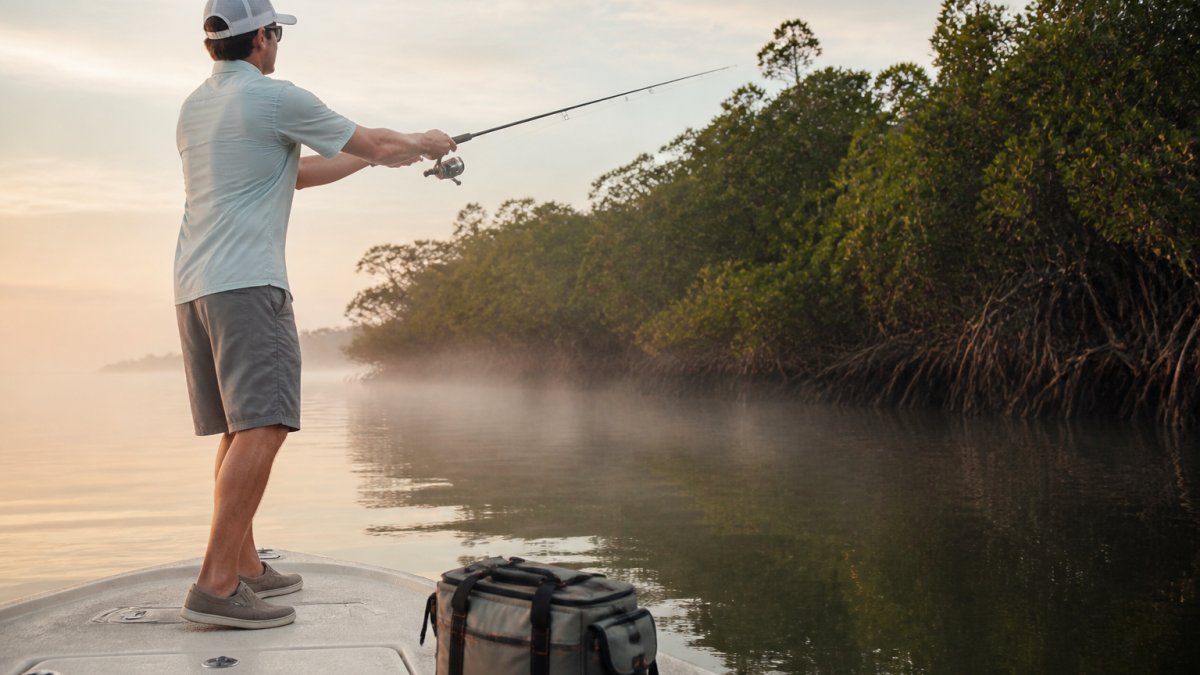
Heat, Humidity, and Salt: What Your Shirt Has to Handle
The biggest mistake anglers make is buying a shirt based on how it looks on a hanger. Three forces work against you at once: heat drives sweat, humidity stops it from evaporating, and salt spray breaks down fibers and leaves discoloration that never washes out. A shirt that handles one but not the others will disappoint you by August.
That is why fabric matters more than cut or print. Look for a tight knit, moisture-wicking construction, and a finish that resists stains and odor rather than absorbing them.
UPF Performance Fishing Shirts: What the Rating Actually Means
UPF performance fishing shirts carry a rating measuring how much UV radiation the fabric blocks. UPF 44+ allows roughly 1/44th of UV rays through, a meaningful step up from an ordinary cotton tee. The rating applies to covered skin only, so long sleeves protect your arms while short sleeves leave them exposed. That distinction separates a shirt that works from one that gives false security.
How UPF 44+ Compares to a Standard Cotton Tee
A standard cotton tee offers far less protection than most people assume, and it drops further when the fabric gets wet or stretched. A purpose-built performance shirt holds its rating because the knit is tight and the fiber is engineered for it. Our Snook Short Sleeve and Florida Lobster Short Sleeve both carry UPF 44+, and the long sleeve versions extend that coverage down the arms.

| Feature | Standard Cotton Tee | UPF 44+ Performance Shirt |
|---|---|---|
| UV protection | Low, drops when wet | UPF 44+ on covered skin |
| Moisture handling | Absorbs and holds sweat | Wicks sweat away |
| Quick-dry | Slow | Fast |
| Odor resistance | None | Built-in |
| Salt durability | Breaks down over time | Fade and snag resistant |
Cotton is comfortable for an hour and miserable by noon.
The Best Fishing Shirts for Hot Weather: Fabric Specs That Matter
The best fishing shirts for hot weather share four specs: lightweight construction, moisture-wicking fabric, quick-dry performance, and antimicrobial treatment. Weight matters most, a 4 oz. polyester shirt moves air and dries fast, while heavier fabric traps heat against your skin.
Why 4 oz. Polyester Beats Heavier Blends in the Heat
Fabric weight, measured in ounces per square yard (oz./yd²), is the best predictor of how a shirt feels at 2 p.m. in July.
Fiber choice matters just as much. 100% polyester dries faster than cotton/poly blends because it is hydrophobic, it holds moisture only in the spaces between fibers, where airflow pulls it out. Cotton is hydrophilic, bonding with water at the molecular level, which is why a wet cotton tee stays heavy and clammy for hours.
Moisture-Wicking, Quick-Dry, and Antimicrobial Explained
Moisture-wicking is capillary action: the fabric is engineered with a differential, often a hydrophobic inner face and a more hydrophilic outer face, so sweat is pulled from your skin to the surface, where it spreads and evaporates faster.
Quick-dry measures how fast the fabric releases moisture once saturated.
Antimicrobial treatment slows the bacteria that metabolize sweat and produce odor; silver-ion and zinc-based finishes are most common. It fades with repeated washings, but on a 12-hour day it is the difference between a shirt you can wear again tomorrow and one you have to quarantine.
A Quick Spec Checklist Before You Buy
- Weight: 4-4.5 oz./yd² for hot-weather inshore and nearshore.
- Fiber: 100% polyester or a poly-dominant blend; avoid cotton-heavy blends for all-day wear.
- Knit: Tight enough to hold a UPF rating, open enough to breathe.
- Finish: Moisture-wicking, quick-dry, and antimicrobial are the three to look for on the tag.
- Seams: Flatlock or reinforced shoulder seams hold up to salt and casting strain.
For a full breakdown of how these fabrics perform, see the American Chemical Society overview of moisture management in textiles.
The Sustainability Angle Most Shirts Ignore
Most performance shirts on the shelf are made from virgin polyester, which is petroleum-derived. A growing number of brands, including ours, are moving toward recycled polyester spun from post-consumer plastic, including ocean-bound plastic recovered from coastal waterways. Performance is comparable: recycled polyester wicks, dries, and holds a UPF rating the same way, because the polymer is chemically identical. The difference is the feedstock. If sustainability matters, look for a recycled-content callout on the tag and treat it as a tiebreaker between two shirts that otherwise spec out the same.
Inshore vs. Offshore: Picking the Right Florida Fishing Shirt
Inshore and offshore fishing demand different apparel. Inshore means shallow flats, mangroves, and frequent casting in brutal heat. Offshore means open water, stronger sun reflection, and longer exposure with less shade. The right shirt depends on where you fish most.
- Inshore: Short sleeve for airflow and freedom of movement. Our Snook Short Sleeve and USA Redfish Short Sleeve are built for this.
- Offshore: Long sleeve for full arm coverage against reflected UV. The Mahi Long Sleeve and USA Snook Long Sleeve fit here.
- Mixed use: A long sleeve you can push up covers both. The Florida Lobster Long Sleeve works either way.
Water camo and bold fish graphics are a matter of taste. The specs are not.

Short Sleeve or Long Sleeve? A Simple Decision Framework
Choose short sleeve if you fish in shade, run hot, or fish short sessions. Choose long sleeve if you fish open water, fish all day, or burn easily. Everything else is preference.
SaltyGrown Men's Snook Short Sleeve Performance Shirt →
Long sleeve shirts protect more skin and cut down on sunscreen reapplication. Short sleeve shirts feel cooler and move better when you cast constantly. Many anglers keep one of each and decide based on the forecast. Our Women's Tarpon Long Sleeve USA Performance Shirt gives the same coverage in a contoured fit.

Sizing, Fit, and Care: What Anglers Get Wrong
Fit and care are where most anglers lose the value of a good shirt. Performance apparel should fit close to the body without being tight, loose shirts move inefficiently and tight ones restrict your cast. Order your normal size unless you plan to layer; between sizes, size up for airflow.
Fit for Active Casting vs. Casual Wear
A shirt that fits well on the dock is not always the shirt that fits well on the bow. When casting repeatedly, the shoulders and upper back need room to rotate without the hem pulling out of your waistband. Many guides size up one from their everyday tee for casting shirts and stay true to size for dock wear.
For women, contoured cuts like our Women's Tarpon Long Sleeve USA Performance Shirt have a narrower waist and shorter sleeve length; if you are between sizes and plan to layer a sun hoodie underneath, size up.
How to Remove Salt Stains, Fish Slime, and Odor
This is the part most care guides skip.
Salt stains. Salt leaves a white residue and, over time, abrades fibers and dulls prints. Rinse in fresh water immediately after you get off the water, before the shirt dries.
Fish slime and blood. These are protein-based and set permanently if washed in hot water or dried before treating. Rinse in cold water, apply a small amount of liquid detergent directly to the spot, and let it sit 10-15 minutes before washing.
Odor. Antimicrobial finishes slow odor but do not eliminate it, especially at the neck, armpits, and shoulder seams where salt spray and sweat concentrate.
A Care Routine That Actually Works
- Rinse in fresh water immediately after saltwater exposure, before the shirt dries
- Wash in cold water with like colors and a mild liquid detergent
- Skip fabric softener, dryer sheets, and chlorine bleach
- Treat protein stains (slime, blood) with cold water and detergent before washing
- Soak in diluted white vinegar for persistent odor, then wash normally
- Tumble dry low or hang dry in the shade
- Store folded, not on a wire hanger, to protect shoulder seams
Skip these steps and the wicking, odor resistance, and print degrade faster; do them and a quality shirt lasts multiple seasons.
On sizing hesitation: read the fit notes on each product page and use the returns policy if it does not work. We offer easy returns so you can order with confidence.
Conclusion
Buying the wrong fishing shirt costs you comfort on every trip, and salt and sun do not forgive cheap fabric. A shirt built for the conditions, UPF 44+, moisture-wicking polyester, reinforced seams, changes how a long day on the water feels. SaltyGrown builds performance fishing shirts for exactly this environment, from the Snook Short Sleeve to the Mahi Long Sleeve, with free U.S. shipping on orders of $100 or more and easy returns. Shop best sellers and gear up for the season.
Frequently Asked Questions
What features should I look for in a saltwater fishing shirt?
Prioritize four things: UPF sun protection, moisture-wicking fabric, salt resistance, and reinforced construction. SaltyGrown's performance shirts use 4 oz. 100% polyester with UPF 44+ protection, plus stain, odor, snag, and fade resistance. Reinforced shoulder seams and double needle coverstitch hems hold up to casting and repeat washes. A tag-free neck matters more than people expect on a 10-hour day. Skip anything cotton, because it holds water, dries slowly, and loses shape after salt exposure.
How do I choose the right fishing shirt for hot and humid weather?
Go lightweight and breathable first. A 4 oz. polyester knit moves air better than heavier blends and dries fast once it gets wet. Moisture-wicking fabric pulls sweat off your skin so you are not sitting in a soaked shirt by noon. If you burn easily or fish long days, pick a long sleeve option like the SaltyGrown Men's Mahi Long Sleeve Performance Shirt at $35, which covers your arms while still breathing. Short sleeve versions at $30 to $35 work well for early mornings and cloudy days.
What are the benefits of wearing UPF-rated fishing shirts?
UPF-rated fabric blocks UV rays before they reach your skin, which matters when sun reflects off the water and doubles your exposure. SaltyGrown shirts carry UPF 44+ protection on covered areas, so your shoulders, back, and arms get consistent coverage without reapplying sunscreen every hour. Long sleeve styles extend that coverage down your arms. Fabric protection does not wash off or sweat off the way lotion does, which is why most anglers treat a UPF shirt as their first layer of sun safety.
How should I care for my performance fishing apparel to make it last?
Rinse your shirt in fresh water after every saltwater trip before it goes in the hamper. Salt left in the fibers is what causes the dull discoloration and stiffness anglers complain about. Wash cold on a normal cycle, skip fabric softener because it clogs the wicking finish, and hang dry or tumble low. SaltyGrown's shirts are stain, odor, snag, and fade resistant, so they handle repeat washes well, but the fresh water rinse is the step that decides whether a shirt lasts one season or five.
Choosing gear that holds up to salt, sun, and a full day on the flats is not a small decision. SaltyGrown makes UPF 44+ performance fishing shirts in short and long sleeve, plus custom patch hats and coastal apparel for men, women, and kids. With free U.S. shipping on orders of $100 or more and easy returns, you can find your fit without the risk. Get started with SaltyGrown and fish harder, longer, and cooler all season.