
Best Breathable Clothing for Humid Climates: 2026 Guide
Table of Contents
- What Makes Clothing Breathable in Humid Climates
- Moisture-Wicking Fabrics for Summer: Natural vs. Synthetic
- UPF Clothing for Sun Protection: Balancing Coverage and Breathability
- Best Lightweight Fishing Shirts for Long Days on the Water
- Layering and Fit: Loose Silhouettes, Ventilation, and Climate-Specific Strategies
- Odor Management and Clothing Care in High Humidity
- The Bottom Line: Choosing Breathable Clothing That Works
- Frequently Asked Questions
Last Updated: September 23, 2026
What Makes Clothing Breathable in Humid Climates
Breathable clothing for humid climates is apparel engineered to move sweat vapor away from your skin and out through the fabric before it soaks you. In humid air, that process slows down, so fabric choice matters more than it does in dry heat. This guide breaks down how airflow, moisture management, and evaporation actually work together, and which fabrics hold up when the air itself is working against you.
Airflow, Moisture Management, and Evaporation
Three mechanisms decide whether a shirt keeps you comfortable in muggy conditions.
Moisture-Wicking Fabrics for Summer: Natural vs. Synthetic
The best moisture-wicking fabrics for summer split into two camps, and neither wins outright. Natural fibers like cotton, linen, and hemp are comfortable and breathe well, but they absorb water and hold it. Synthetics like polyester and nylon move moisture instead of soaking it, which is why they dry faster.
Cellulose-Based Fibers and Synthetic Blends
Cellulose-based fibers, which include cotton, linen, and bamboo-derived fabrics, are hydrophilic. They love water. That makes them soft and skin-friendly, but a soaked cotton shirt stays heavy and clings.
| Fiber Type | Moisture Behavior | Breathability | Best For |
|---|---|---|---|
| Cotton | Absorbs and holds | Moderate | Dry heat, short wear |
| Linen | Absorbs, dries fast | High | Light activity, airflow |
| Polyester | Wicks, repels water | High when knit | Sweat-heavy activity |
| Nylon | Wicks, durable | Moderate to high | Rugged marine use |
| Blends | Balanced | Varies | All-around humid wear |
UPF Clothing for Sun Protection: Balancing Coverage and Breathability
UPF clothing for sun protection is apparel tested and labeled for how much ultraviolet radiation it blocks. The rating works like SPF in reverse: UPF 50 means roughly 1/50th of UV radiation passes through, or about 98% blocked, when the fabric is tested dry and unstretched. That last clause is where most guides stop, and it's where humid-climate shoppers get burned, literally.
How UPF Is Actually Rated (and Why It Slips)
UPF is measured on a swatch of fabric in a lab, dry, flat, and untensioned. Real-world wear breaks all three conditions:
- Stretch: Knit fabrics lose protection as they stretch over shoulders, backs, and thighs. A shirt rated UPF 50 can drop meaningfully when pulled taut across the body.
- Wetness: Water fills the spaces between fibers and reduces how much UV the fabric scatters. A soaked white cotton tee can fall to roughly the protection of a basic unrated shirt.
- Wear and wash: Repeated laundering and abrasion thin the fabric and open the weave over a season or two.
The Coverage-vs-Airflow Trade-Off, Solved
The tension is real: more coverage usually means more fabric, and more fabric can mean less airflow. But the fix isn't less coverage. It's smarter construction. Long sleeves in a lightweight, loose-weave knit cover your arms while still letting heat dissipate, and the garment's cut does as much work as its fiber content.
Look for these construction features:
- Ventilation panels, mesh underarms, back yokes, or side gussets that dump heat without exposing skin to sun
- A relaxed drape that keeps fabric off your skin so air can move in the gap
- Light colors that reflect rather than absorb solar heat
- A hood or collar that covers the neck, one of the most sun-exposed and least-protected zones
Where UPF Gear Falls Short
No fabric replaces behavior. Pair coverage with shade during peak UV hours, and reapply sunscreen on exposed areas like the neck, ears, hands, and the tops of your feet. UPF clothing reduces how much sunscreen you need, it doesn't eliminate the need. For humid climates specifically, treat UPF as one layer in a system: breathable coverage for the bulk of your skin, sunscreen for the gaps, and shade as your backup when the fabric is soaked through.
Best Lightweight Fishing Shirts for Long Days on the Water
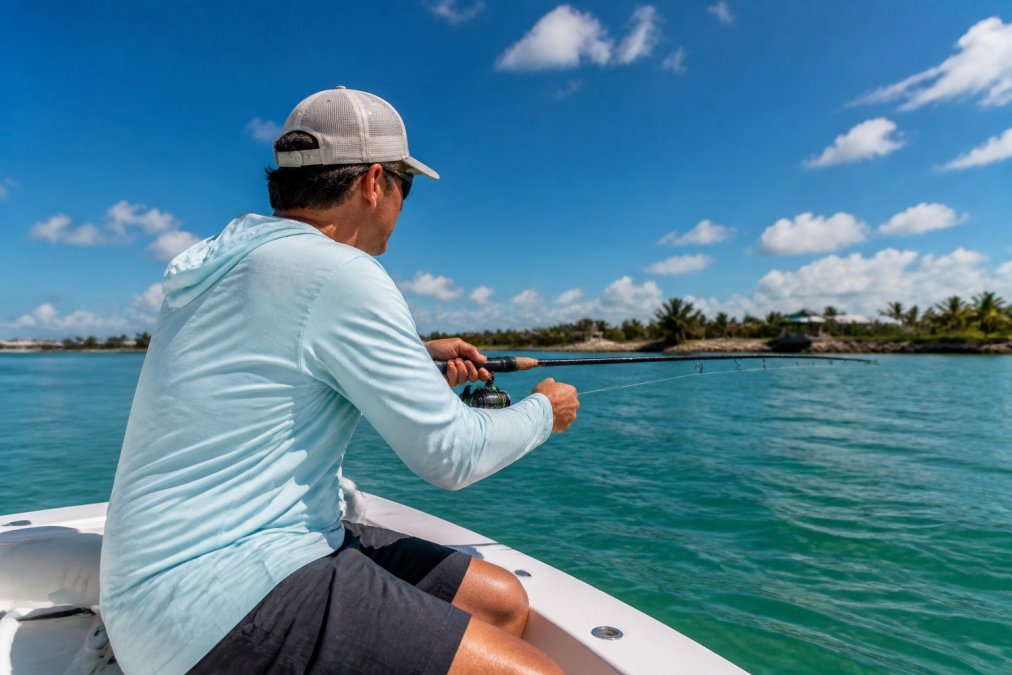
The best lightweight fishing shirts solve a specific problem: staying cool and protected through hours of sun, spray, and sweat. Look for a long-sleeve performance shirt in a quick-dry synthetic blend with a UPF rating, ventilation, and a cut that doesn't cling when wet.
Layering and Fit: Loose Silhouettes, Ventilation, and Climate-Specific Strategies
Loose-fitting silhouettes are not a style preference in humid climates. They're a functional requirement. A relaxed cut creates an air gap between fabric and skin, and that gap is where heat dissipation and evaporation happen.
- Base layer: a moisture-wicking synthetic or blend tee against the skin
- Mid layer: a lightweight long-sleeve UPF shirt for sun and spray
- Outer layer: a packable, breathable shell for wind or rain, worn only when needed
Odor Management and Clothing Care in High Humidity
Odor management is the problem humid-climate guides ignore, and it's the one that ruins gear fastest. Here's the mechanism most articles skip: body odor isn't produced by sweat itself. It's produced when bacteria on your skin metabolize the compounds in sweat and sebum, and warm, damp fabric is an ideal incubator. In dry heat, sweat evaporates and the fabric dries between wears.
Why Synthetics Hold Odor (and Naturals Don't, as Badly)
Natural fibers like cotton, linen, and wool are hydrophilic and have a rougher surface chemistry that releases odor compounds more readily in the wash. Synthetics like polyester and nylon are hydrophobic and oleophilic, they repel water but attract oils, which is exactly what odor compounds are. Over time, those compounds accumulate in the fiber and resist rinsing.
What Actually Works: Treatments, Silver, and Rotation
Anti-microbial finishes are the industry's answer, and they fall into a few categories worth knowing:
- Silver-based treatments, silver ions disrupt bacterial metabolism. Effective, but they can wash out over time, and performance varies by how the silver is bonded to the fiber.
- Permanent fiber-level treatments, some brands build odor resistance into the fiber itself rather than coating it, so it survives more wash cycles.
- Merino wool, naturally odor-resistant because wool fibers resist bacterial growth and release odor compounds in the wash. It's the one natural fiber that competes with treated synthetics on odor, though it's warmer and slower-drying.
Care Habits That Preserve Performance
- Rinse after saltwater, salt residue discolors fabric over time and degrades fibers. A quick freshwater rinse after a day on the water extends gear life noticeably.
- Wash cold, skip softener, fabric softener and dryer sheets coat fibers and clog the wicking channels that make the shirt work. This is the most common reason a shirt "stops working" when it isn't worn out.
- Air-dry, high heat can damage elastane and some anti-microbial finishes. Line drying also avoids the heat that sets odor compounds into synthetic fibers.
- Wash promptly, letting damp, worn gear sit in a bag or hamper for days gives bacteria a head start that no detergent fully undoes.
The Bottom Line on Odor
Odor control in humid climates is a two-front problem: choose fabrics and treatments that resist bacterial growth, and care for them in a way that doesn't undo the engineering. A well-treated synthetic shirt that's washed cold, air-dried, and rotated will outlast and out-perform an untreated one by a wide margin, and it'll smell like nothing at all, which is exactly the goal.
The Bottom Line: Choosing Breathable Clothing That Works
The right breathable clothing for humid climates comes down to three decisions: pick a fabric that moves moisture instead of holding it, choose a loose cut that lets air circulate, and protect against sun without smothering yourself in heavy coverage. Get those three right and humidity stops being the enemy.
Frequently Asked Questions
What is the most breathable fabric for hot, humid weather?
Linen and lightweight merino wool offer excellent breathability because their natural fibers absorb and release moisture vapor. For high humidity, synthetic moisture-wicking fabrics like polyester and nylon are often better because they move liquid sweat away from your skin and dry quickly. Blends that combine natural and synthetic fibers can give you the best of both: breathability and quick-dry performance. Look for loose-weave or knit constructions that allow air permeability.
Does moisture-wicking fabric actually work in high humidity?
Moisture-wicking fabrics still help in high humidity, but their performance is reduced because evaporation is slower when the air is already saturated. They move sweat away from your skin to the fabric surface, where it can evaporate. In humid conditions, choose lightweight, quick-dry fabrics with high air permeability to maximize evaporation. Combining moisture-wicking with loose-fitting, ventilated designs improves comfort significantly compared to cotton, which holds moisture and clings.
What should I look for in UPF clothing for sun protection?
Look for a UPF rating of 30 or higher, with 50+ offering excellent protection. The fabric should be tightly woven or knit but still allow airflow. Darker colors and synthetic fibers like polyester often provide better UV blockage. However, breathability matters: choose garments with ventilation panels or mesh inserts. Remember that UPF protection can decrease if the fabric gets wet or stretched, so consider quick-dry materials that maintain coverage.
How do I prevent odor in humid climates?
Odor-causing bacteria thrive in warm, moist environments. Choose fabrics with antimicrobial treatments or natural antimicrobial properties like merino wool. Wash your clothing after each wear, and avoid fabric softeners that can trap odors. For synthetic fabrics, use a sports detergent that removes residue. Quick-dry materials that don't stay damp are less likely to develop odors. Also, consider loose-fitting styles that allow sweat to evaporate quickly, reducing bacterial growth.
Picking gear for humid, salt-heavy days is where most apparel falls apart. SaltyGrown builds performance fishing shirts and coastal apparel made for sun, salt, and open water, with free U.S. shipping on orders of $100 or more, easy returns, and secure checkout. Shop best sellers and gear up for your next day on the water.